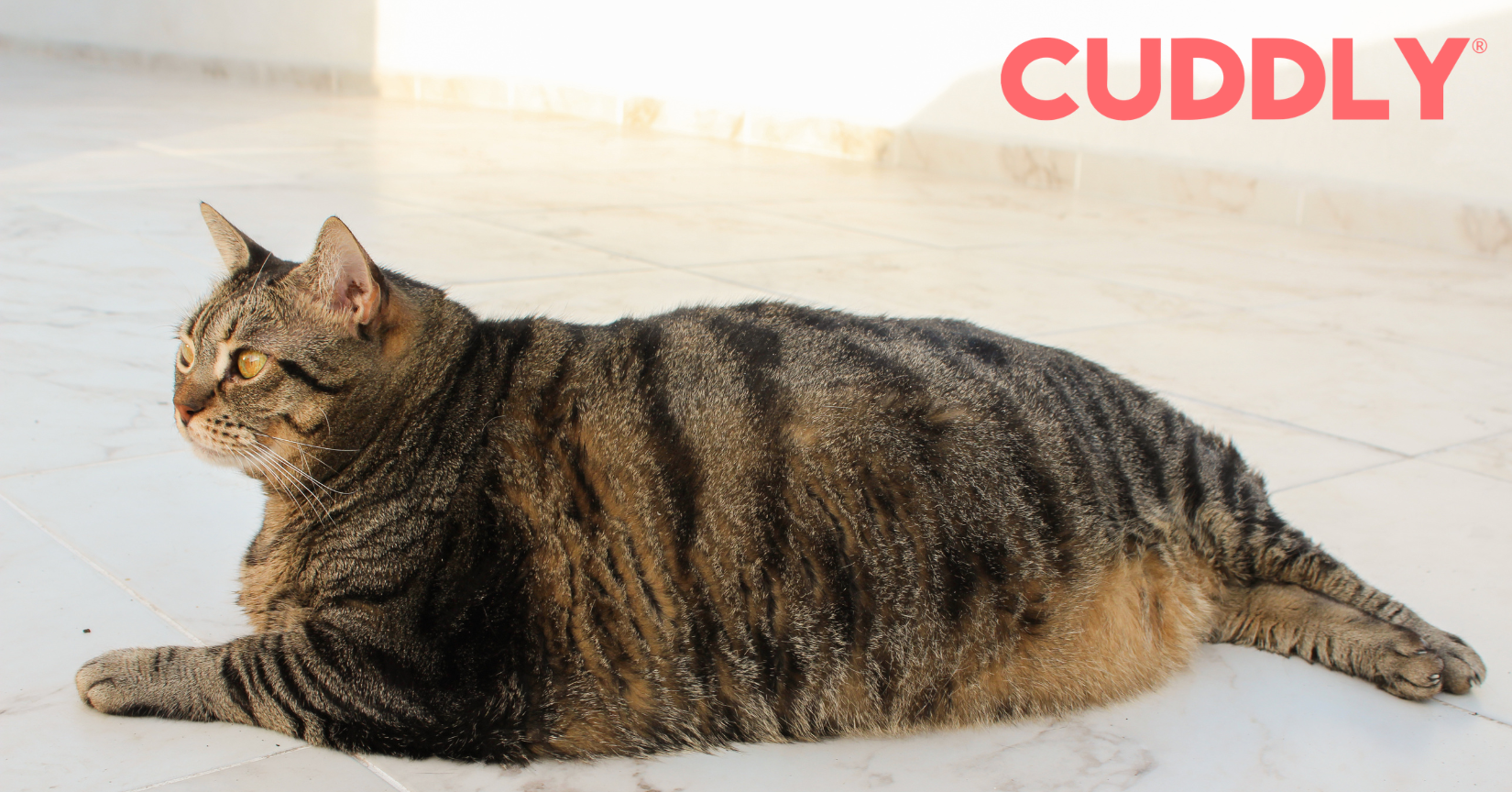
Is your cat looking a little… extra fluffy these days?
I’m going to be vulnerable with you for a second here. There was a point in time when I couldn’t tell if my cat, Chippy, was overweight or not. Chippy’s silhouette had softened since I first found him as a kitten surviving off unlucky birds in my apartment parking lot. Back then, his growth had been stunted by malnutrition. But by the time his third birthday rolled around, my cat looked like he could roll around, too.
In the throes of parental guilt, I scanned countless internet articles in search of answers. Instead, I was left with more questions. Looking at body condition score charts wasn’t helping me out as much as I’d hoped. I was a first-time cat parent, and I had no idea what to look for.
Chippy had a low-hanging, floppy belly. That worried me. But his stomach seemed to disappear when he stretched. He could spring from the floor to the top of the dresser with ease. He could spin cartwheels mid-air just to catch his catnip toy. He was active as ever, even if he liked to spend most of the day napping on the windowsill. So surely he was fine, right? But what if I had it all wrong?
And so, I took Chippy to the veterinarian for a professional opinion. He slinked out of his carrier and onto the exam table, and the doctor began to poke and prod him. I held my breath. The doctor looked at me. I looked back.
“Not fat,” she said. “Just big.”
If my situation sounds similar to yours, you’re not alone, and I’m here to save you some worry. In this article, you’ll find ways to tell if your feline friend is overweight, some tips on how to prevent obesity in cats, and what to do if you think your furbaby might need some help getting on the right track. But before we jump into it, let’s talk about the primordial pouch—and if you’re a cat owner that’s never heard of this term, you might want to take notes.
The Primordial Pouch
One of the main reasons I thought my cat was overweight was because of his primordial pouch. As a larger (but not fat, just generally big) cat, my boy had a very noticeable pouch. This evolutionary feature can make it harder to tell if a cat is overweight compared to a dog, and if you just adopted a cat for the first time, you might not know this.
The primordial pouch is a flap of skin near a cat’s hind legs that covers their stomach. As cats enter adulthood, this pouch becomes more pronounced. All cats have a primordial pouch, regardless of sex or size.
Pet scientists anticipate that this pouch has several purposes. First and foremost, the primordial pouch serves as protection for the cat’s vital organs. If the cat were to get into a fight with another feline, this skin would shield their important bits from danger. Another potential purpose is that the extra skin allows for greater flexibility and range of motion. If you’ve ever seen a cat leap between furniture or fly through the air in pursuit of a string toy, you’ll know exactly what I’m talking about.
So, Is It The Primordial Pouch, Or Is It Fat?
A primordial pouch has a lot more flexibility than fat. If you touch your cat’s stomach (that is, if they’ll let you) or observe them while they’re walking, a primordial pouch will swing from side to side, whereas fat won’t really move. Plus, the primordial pouch is primarily located on the cat’s underside, near the rear legs. Fat, on the other hand, will be distributed throughout the body.
Signs Of Obesity To Look Out For Other Than Just Appearance
Before we jump in, it’s important to know that factors like your cat’s breed and age can affect their ideal weight. Always talk to your veterinarian to get a professional opinion. But, generally speaking, there are a few telltale signs that aren’t appearance-based that can indicate your cat is overweight.
A Dip In Energy
It’s normal for your cat to nap on and off during the day, and if you have a senior kitty, it’s likely that they would prefer to be napping than doing anything else. However, if you notice your cat is extra lethargic and refuses to move (aside from walking back and forth between the food bowl and the sunny patch on the floor), that could be a sign of an underlying health issue.
Difficulty Jumping
Our feline friends are natural-born acrobats. If you start to notice that your cat requires multiple attempts to jump up on furniture or cat trees (especially if they used to be able to do so with ease), there’s a possibility that they’re being weighed down by a few extra pounds.
Difficulty Grooming
This sign might be more noticeable in cats with long hair. Obese cats struggle to contort themselves the way they need to in order to clean their fur. Difficulty grooming occurs later, in more pronounced stages of obesity. So if you’ve already noticed this sign, it might be time to book an appointment with your vet.
You Can’t Feel Their Ribs
Feel the back of your hand. Notice how you can feel the ridges of your bones? That’s how it should feel if you pet your cat’s ribs. If there’s any extra “padding” and you can’t feel their ribcage from a light touch alone, it’s possible your cat is overweight. This test might be more difficult to pull off with cat breeds that have thicker hair.
Why Is Feline Obesity A Problem?
Cats thrive in environments that allow them to explore and engage their predator instincts. They love movement and need physical activity, not just for their health, but for their mental well-being, too. Obesity limits their quality of life because they can no longer move freely, climb, or chase the way their bodies are designed to. Over time, this restriction can lead to boredom and even depression, as their natural behaviors are suppressed.
In addition to the mental toll that obesity can take on a cat, there’s obviously the physical harm as well. Obese cats are much more likely to develop health concerns such as osteoarthritis, a condition that causes the tissue in the joints and between the bones to diminish, which leads to the bones rubbing together. It can be incredibly painful and further limit your cat’s mobility.
How To Help Your Cat Maintain A Healthy Weight
With feline obesity on the rise, especially for indoor cats, it’s more important than ever that pet owners are doing their part to ensure their furbaby is healthy. Below are a few ways you can help your cat stay on the right track. And as always, if you’re trying to help your cat lose a few pounds, be sure to talk with your veterinarian for best practices.
Encourage Movement
While dog owners might take their pup on a walk around the block, exercise for indoor cats will look different. Using fishing-pole-style toys, you can encourage your cat to get a move on. Some feline friends even prefer laser pointers, which can be great for motivating your cat to run around the room without exhausting yourself in the process (just be sure to give your cat an actual physical toy at the end—some cats find laser pointers frustrating). Having a variety of climbable surfaces, such as multi-tiered cat trees, can also be an excellent exercise tool.
Feed A Nutritious, High-Protein, Low-Filler Diet
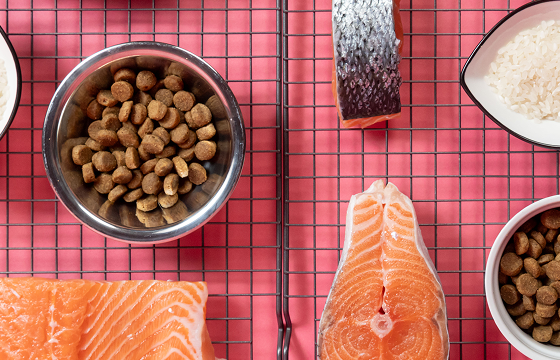
Too many cat foods on the market have cornmeal as their first ingredient. Not good. It’s always smart to check the ingredients list on the back of your cat’s food and look up any unfamiliar ingredients that could be contributing to your cat’s weight problems. Generally, ingredients like corn are a no-go. Foods that emphasize lean protein sources are where it’s at.
If the countless cat food options out there feel overwhelming, we encourage you to check out CUDDLY’s new cat food line. Right now, there are two tasty options: CUDDLY Seafood Medley Dry Cat Food or CUDDLY Chicken & Rice Dry Cat Food. Regardless of whether your cat prefers to surf or turf, we can guarantee that protein is the number one ingredient—meaning whitefish and chicken, respectively. No yucky corn fillers. Even better, every purchase of CUDDLY food donates a meal to a shelter pet in need. By feeding your best friend, you’re also ensuring an animal in need has a full bowl.
Intentionally Measure Out Food At Mealtimes
Pet owners often overlook this sneaky culprit when determining ways to reduce their cat’s caloric intake. If your cat food comes with a cup to scoop food, it might not measure as precisely as an actual 8-ounce measuring cup would, leading to unintentional overfeeding. After you talk with your veterinarian to determine appropriate daily portions for your cat, be sure you’re actually scooping the right amount!
Don’t Forget That Treats Have Calories
When you’re determining your cat’s caloric intake, don’t forget to calculate treats and snacks. Some dental health treats, for example, require your cat to take up to 16 treats for the dental benefits to be effective. This can easily tack on extra hidden calories in your pet’s diet.
Make The Switch From Free Feeding To Scheduled Mealtimes
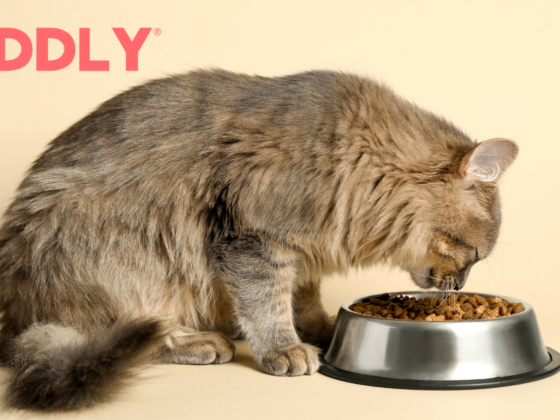
Free feeding refers to the practice of leaving food available to your cat at all times, allowing them to choose when and how much to eat. However, not all cats can be trusted to eat just enough food to feel full. Free feeding often paves the way for overeating. Instead, offering controlled portions at scheduled mealtimes is the healthier choice for managing your cat’s weight.
What To Do If You Think Your Cat Might Be Overweight
It’s not easy to help cats shed pounds. That’s part of the reason it’s so important to manage your cat’s weight from the get-go! While attempting to help their cat lose weight, some well-meaning pet owners become too restrictive, but going cold turkey can be unsafe. Gradually reducing caloric intake and slowly introducing more and more exercise is the way to go. Slow and steady wins the race!
Schedule An Appointment With Your Veterinarian
First and foremost, if you suspect your cat is overweight, you should talk with your veterinarian. They’re the professionals, and they can help you determine your cat’s ideal weight and the steps you need to take to get there.
Determine What Steps You Need To Take
It’s likely your veterinarian will recommend the above measures for helping your cat maintain a healthy weight. They can help you figure out a timeline and set goals for your cat’s health journey, and can even check in for progress reports. By setting a weight-loss timeline with your veterinarian, you can ensure you’re not putting undue strain on your cat by accidentally opting for too-restrictive measures.
Stick With It
This is the final and most important step—stick with it! It’s likely that you won’t see the pounds shed off right away. But, with a little consistency, your cat can be feeling their best in no time. Be your cat’s cheerleader, and root for them until they cross that finish line!
At the end of the day, supporting your feline friend’s well-being doesn’t have to feel overwhelming. Little adjustments like prioritizing playtime, measuring meals accurately, and choosing a high-quality, protein-first diet can help your cat thrive. If you’re looking for an easy place to start, CUDDLY’s cat food line was designed by companion animal nutritionists with your cat’s health (and happiness) in mind. With real protein as the first ingredient and no unnecessary fillers, this food fuels all those mid-air acrobatics so your cat can keep living life to the fullest.
And remember, helping your cat live their best life is about understanding what’s normal for your cat. Their energy levels and overall happiness will tell you just as much about their health as their shape. Trust your instincts, stay observant, and don’t be afraid to lean on your veterinarian for guidance. You know your cat better than anyone, and small, consistent choices can make a big difference in their health.